Driveclub Vehicle Shaders
I worked as the Principal Technical Artist for the vehicle team on Driveclub, and was responsible for all vehicle shaders and tools.



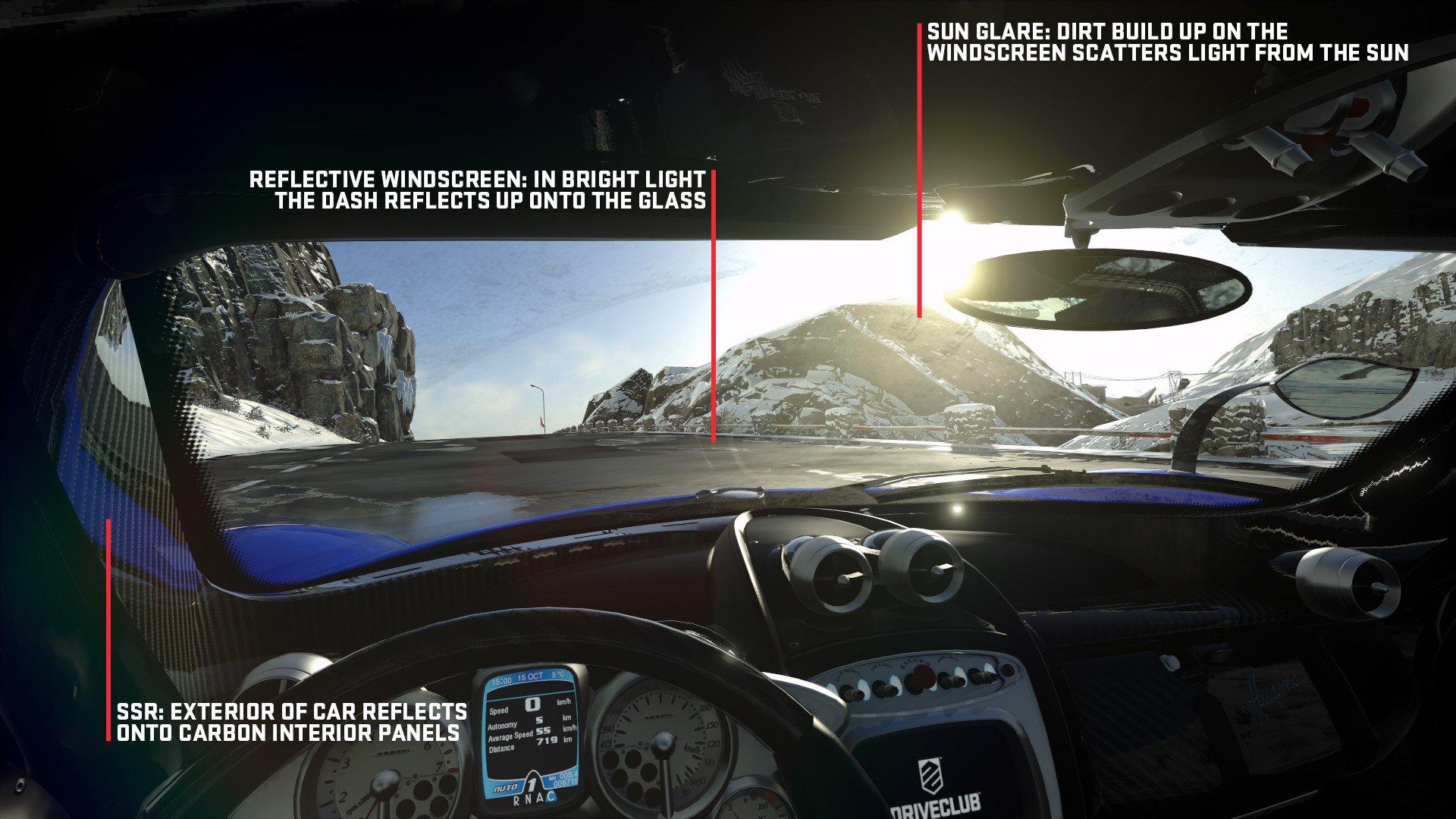



Reflections were faked by baking dash onto transparent polys.

Normals were set so that the reflection was lit the same as the top of the dash

Early procedural metal damage test

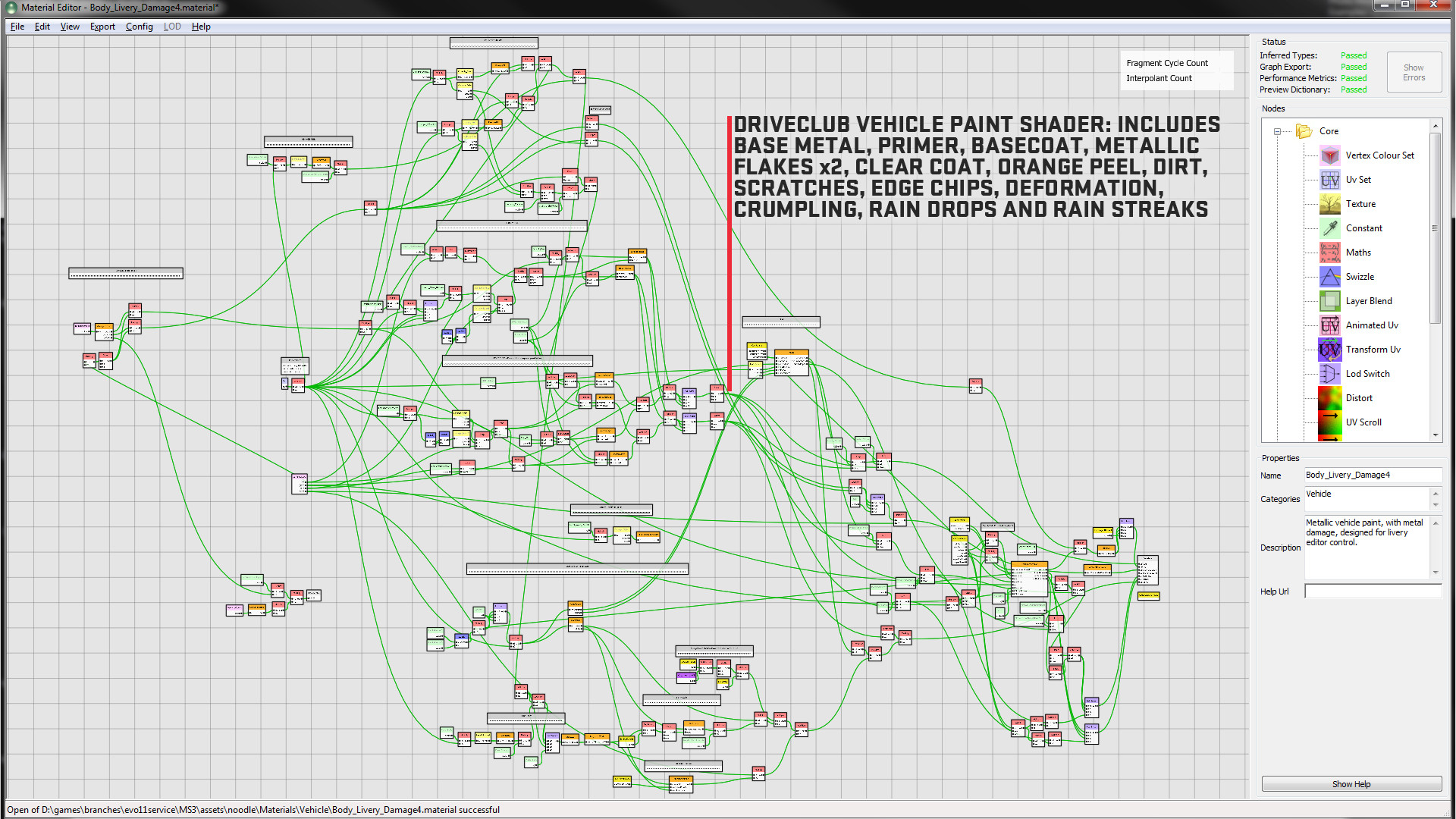
Car paint shader layers
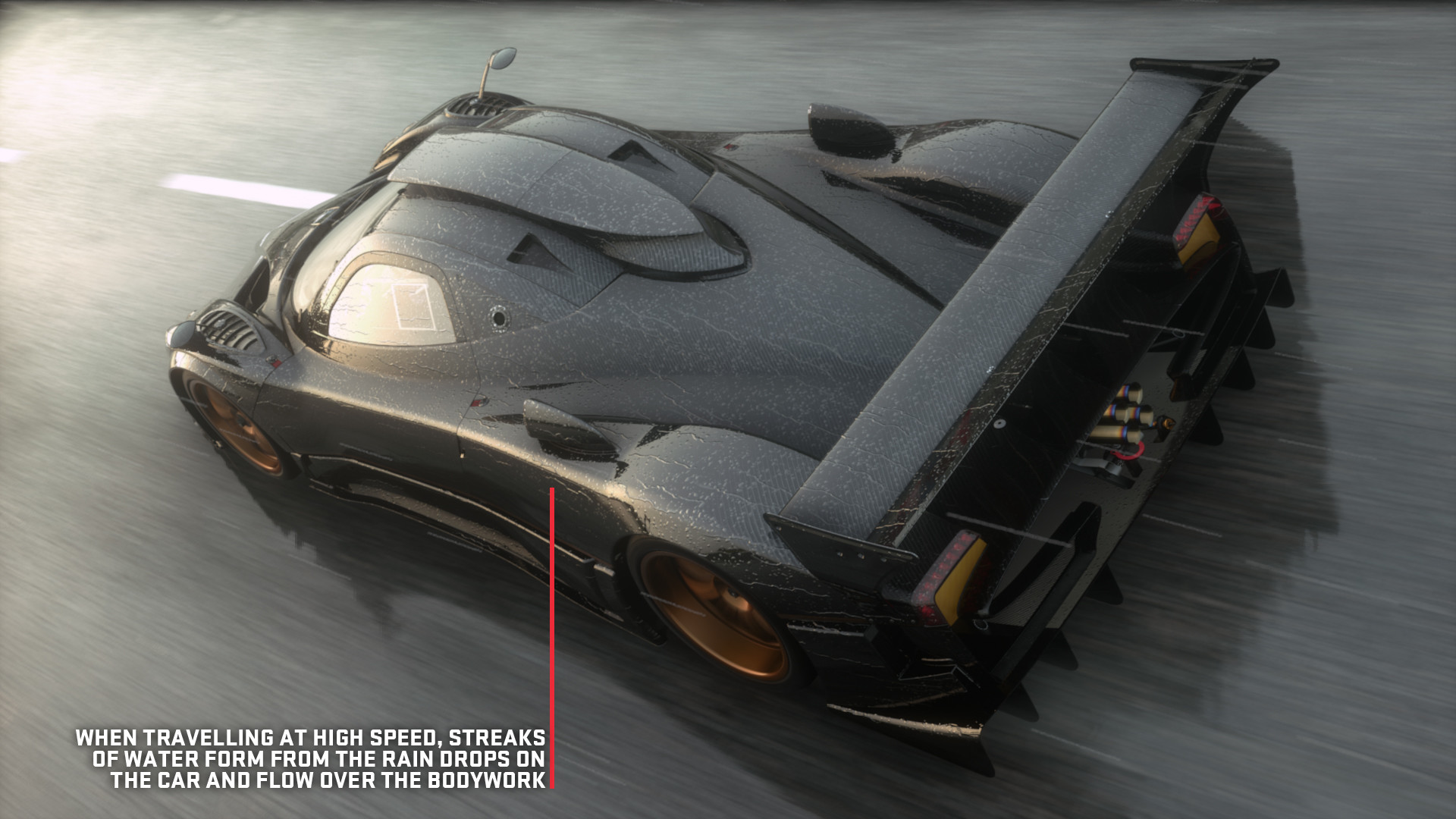
Early rain tests running in Maya, showing animated rain drops, streaks, and wiper mask.

An example of using locked normals to give smooth weld seams with minimal polygons.


Cross polarised photography was used to capture accurate albedo values from real vehicles.
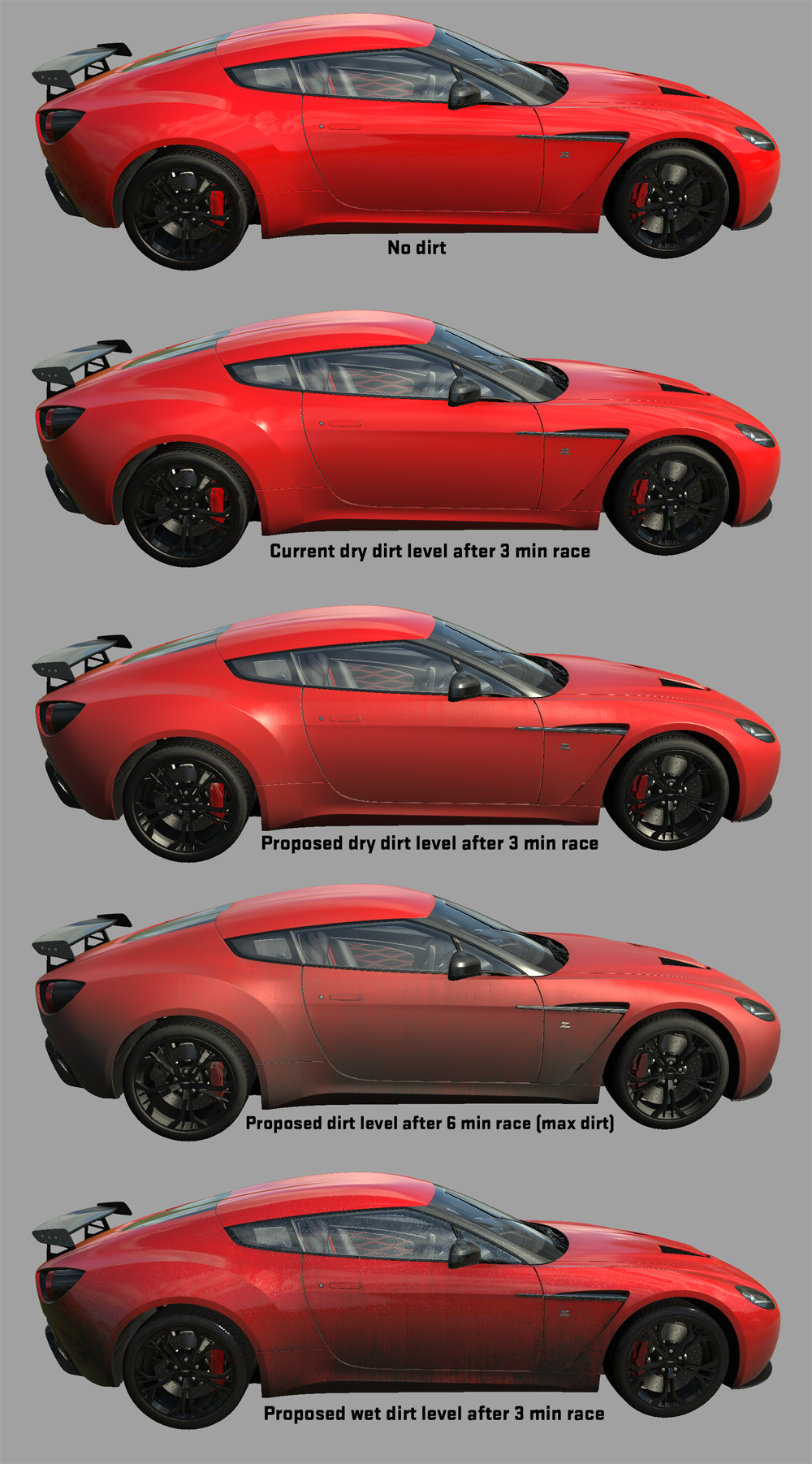
Driveclub mud levels

Dash logo done using parallax shaders on 2 quads.

I created a tool to visualise 3D Volume textures in Maya. This is the ambient occlusion volume for the BAC Mono.


I wrote a tool to bake specular occlusion for cars with metallic interiors - rays were traced from the driver's eye to see if the exterior lightprobe was visible in the reflections.
